







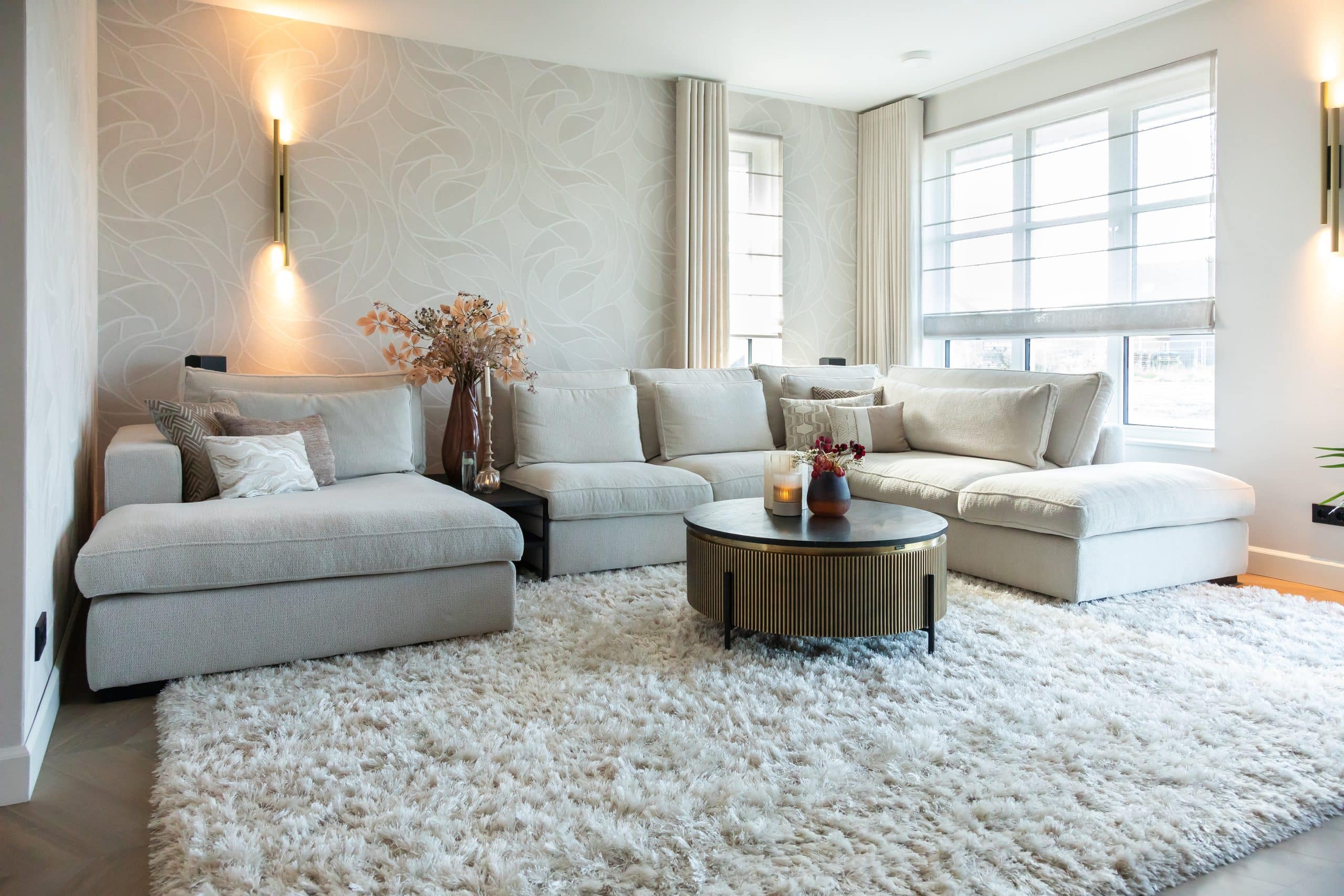
A corner sofa doesn't necessarily make a room feel smaller—it's all about the right choices. With the right size, style, and placement, a corner sofa can even create a sense of spaciousness. Corner sofas often make efficient use of difficult corners and create a clear layout for your living space. By choosing light colors, the right proportions, and a clever layout, you can enjoy the comfort of a corner sofa without making your room feel smaller. The secret lies in finding the perfect balance between functionality and spatial perception.
Do corner sofas make a room smaller or larger?
Corner sofas have a special feature: they can make a room appear both smaller and more spacious, depending on how you use them. This spatial paradox effect This can be explained by the fact that corner sofas, on the one hand, take up more floor space than straight sofas, but on the other hand, they use the available space more efficiently.
A well-placed corner sofa makes optimal use of otherwise unused corners and creates a clear, functional layout. This gives structure to your living room, making the space feel larger. Furthermore, corner sofas offer more seating in a relatively smaller space than multiple individual sofas or armchairs.
The design of the corner sofa also influences the perception of space. Models with open bases, slim armrests, and legs (rather than a closed base) create more visual space and allow light to shine through, contributing to a more spacious feel.
How does the placement of a corner sofa affect spatial perception?
The way you place a corner sofa has a direct influence on how spacious your room appears. strategic positioning The shape of your corner sofa can make the difference between a room that feels cramped or looks spacious.
Placing a corner sofa against a wall makes efficient use of space. This works especially well in smaller rooms, as it frees up space in the center. Ideally, place your corner sofa in a corner that's not immediately visible upon entering – this creates a sense of depth as you enter the room.
A freestanding corner sofa can function as a room divider. This works perfectly in larger, open-plan living rooms where you want to create distinct functional zones. Just be sure to leave plenty of walking space around it; at least 70-80 cm is ideal for easy flow.
Avoid placement that blocks natural walking routes or places the sofa in a dominant position. A corner sofa facing a window can enhance the sense of space by preserving the view outside and allowing more natural light to enter.
Which style of corner sofa is best suited to a small space?
Not all corner sofas are equally suitable for smaller spaces. compact L-shaped A sofa is usually the best choice for limited spaces. It offers a good balance between seating comfort and space efficiency, without overwhelming the room like a U-shaped sofa would.
Choose models with the following features:
- Slim armrests that take up less width
- Raised legs that allow light to shine through under the sofa
- A seat that is not too deep (70-80 cm is ideal for smaller spaces)
- Modular options that you can adapt as your decor changes
Avoid sofas with wide, bulky armrests or a closed base that reaches the floor. These not only visually weigh down your sofa but also detract from the feeling of space created by being able to see through the sofa.
A modular corner sofa offers flexibility – you can add or remove sections depending on your needs and available space. Some models even have a pull-out bed or storage space, providing extra functionality without taking up more space.
How do you choose the right color and fabric for a corner sofa in a small space?
In a smaller space, color and material have a major impact on how spacious your corner sofa appears. The right color choice can make the difference between a sofa that makes a space appear smaller or larger.
Lighter colors reflect more light, creating a more spacious feel. Shades like ivory, light gray, beige, and pastels are excellent choices for smaller spaces. This doesn't mean you should avoid dark colors entirely—a dark sofa can work if the rest of your interior is light.
When it comes to fabrics, smooth, not too heavy textures are preferred. Materials with a subtle sheen can reflect light and contribute to a more spacious feel. Avoid large, busy patterns that visually take up too much space. If you do want a pattern, choose subtle, small designs or textures.
The fabric choice also affects how light reflects in your space. Matte fabrics absorb more light, while fabrics with a slight sheen (such as certain velvets or microfiber varieties) subtly reflect light and can make the room appear larger.
What practical tips help integrate a corner sofa without reducing the space?
There are several practical techniques you can use to integrate your corner sofa without making your room appear smaller. A smart visual balance creating is essential here.
Effective tips are:
- Place a large mirror opposite or next to your corner sofa to visually double the space
- Provide good lighting around the sofa with, for example, standing lamps or wall lighting
- Keep at least 40-50 cm of space between your corner sofa and other furniture for a feeling of openness
- Choose a coffee table that matches your sofa in proportion, preferably a transparent model or one with light legs
- Use floating wall shelves instead of large cabinets to create storage space without taking up floor space
Avoid cluttering the space around your corner sofa. An open space around it allows the sofa to breathe and makes the room feel more spacious. Also, consider a sofa with built-in storage to eliminate the need for other storage units.
Multifunctional accessories, such as a coffee table with storage space or an ottoman that can also serve as a side table, help maximize functionality without adding extra furniture.
What are the most important insights into corner sofas and spatial perception?
The relationship between corner sofas and spatial experience revolves around a careful balance between functionality and visual impact. The key insights are that corner sofas, when chosen and positioned correctly, can even enhance a space. more efficient and bigger can make it seem.
We've seen that the right style, color, placement, and proportions all contribute to a corner sofa's successful integration into your interior. A light, open design with legs creates more visual space, while strategic placement against the wall frees up walking space.
With custom solutions, you can choose the exact configuration that perfectly suits your space, ensuring every inch is used optimally. By choosing light colors and the right accessories, such as mirrors and strategic lighting, you enhance the sense of spaciousness.
At Room108, we understand that the perfect corner sofa shouldn't just be beautiful, but also complement your specific space and lifestyle. By taking this into account, you'll not only help your room feel more spacious but also create a harmonious, functional living environment where comfort and style converge. Make a store appointment for personal advice about the perfect corner sofa for your interior.