







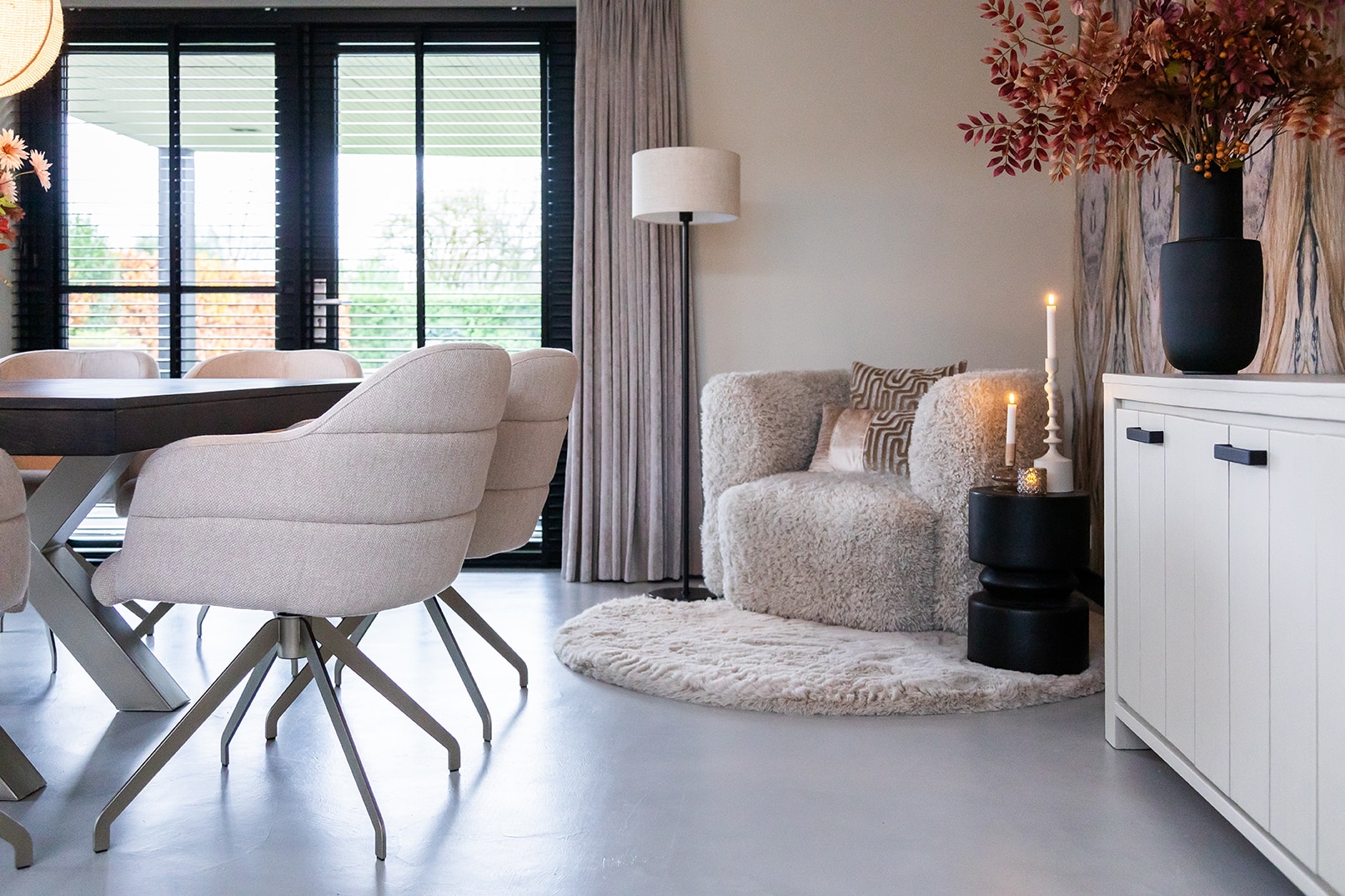
Measuring the correct dimensions for an armchair is essential for both comfort and style in your interior. Start by measuring the available space in your room. Then measure the seat height (ideally 43-48 cm), seat depth (50-60 cm), seat width (50-70 cm), backrest height (70-100 cm), and the total width and depth of the armchair. These dimensions should accommodate your body type and the available space. By measuring accurately, you create a harmonious, comfortable seating experience that fits perfectly into your interior.
Why are the correct dimensions of an armchair important?
The right size of an armchair is important because it directly affects your seating comfort and the overall look of your interior. A well-fitting armchair supports your body properly and prevents back problems or discomfort from prolonged sitting. Furthermore, the right proportions ensure that your armchair harmonious fits in your living space.
Ergonomically, an armchair should suit your height and build. Seat heights that are too high or too low can put pressure on your legs or back, while the wrong seat depth doesn't provide sufficient spinal support. The right size is also crucial from an aesthetic perspective – an armchair that's too large can overwhelm a small space, while one that's too small can feel lost in a larger room.
By paying attention to the right dimensions, you not only create a comfortable seating area, but also a piece of furniture that enhances the style and functionality of your interior. A well-chosen armchair for comfort and style creates the perfect balance between comfort, style and spatial layout.
What basic dimensions should you measure for an armchair?
There are six for an armchair essential dimensions You need to measure to ensure perfect seating comfort. These measurements determine how the armchair feels and how it fits into your space.
The seat height is the distance from the floor to the top of the seat cushion. This determines how easily you can sit down and stand up. The seat depth is the distance from the front of the seat cushion to the backrest and significantly affects the comfort of your legs and back. The seat width indicates how much space you have to sit and affects how freely you can move.
In addition, there are three other important dimensions: the backrest height (which determines the support of your upper back and neck), the armrest height (for optimal support of your arms) and the overall dimensions (width, depth and height of the entire armchair, important for spatial integration).
- Seat height: usually between 43-48 cm
- Seat depth: average 50-60 cm
- Seat width: often 50-70 cm
- Backrest height: varies from 70-100 cm
- Armrest height: approximately 18-25 cm above seat height
- Total dimensions: depending on style and available space
How do you measure the ideal seat height for your body type?
The ideal seat height is a personal measurement that directly relates to your body shape. To adjust it perfectly, start by measuring your lower leg length (from the back of your knees to the sole of your foot). At a good sitting height, your thighs form an angle of about 90 degrees with your lower legs when your feet are flat on the floor.
Follow these steps to determine your ideal seat height:
- Sit upright in a chair with your feet flat on the floor
- Measure the distance from the floor to the hollow of your knee
- Add 2-3 cm for ideal comfort.
- Check that your thighs are almost horizontal
For taller people, a higher seat height (46-48 cm) is more comfortable, while shorter people often benefit more from a lower seat height (43-45 cm). Also consider the type of seat: soft cushions sink with use, reducing the effective seat height. With a deeper seat cushion, you can therefore add 1-2 cm of extra height to your ideal height.
By choosing the correct seat height, you prevent discomfort such as tingling legs (seat too high) or pressure on your thighs (seat too low).
What is the correct seat depth for optimal comfort?
The correct seat depth ensures that your back is well supported while your legs rest comfortably. A perfect seat depth allows you to sit comfortably with your back against the backrest, while there is approximately 2-5 cm of space between the back of your knees and the front edge of the seat cushion. This space prevents pressure on your legs and promotes good posture. blood circulation.
To determine your ideal seat depth, measure the length of your thigh from your back to the back of your knee while sitting upright. Subtract 2-5 cm to arrive at your optimal seat depth. For most people, the ideal seat depth is between 50-60 cm, but this varies depending on your body type.
Note: Seat depth directly affects how relaxed you can sit. A seat that's too deep forces you to lean forward or slump like a limp doll, which can cause back problems. A seat that's too shallow, on the other hand, doesn't provide enough support for your thighs, concentrating your weight on a smaller surface.
The relationship between seat depth and relaxation is important: deeper seats (55-60 cm) are ideal for relaxed lounging, while shallower seats (45-50 cm) are better if you want to sit more actively, for example while reading or conversing.
How does space influence your choice of armchair size?
The dimensions of your room play a crucial role in choosing the right armchair size. An armchair that's too big in a small space feels cramped, while a model that's too small will feel lost in a large room. Therefore, always start by measuring your available space before choosing an armchair.
For a good spatial balance, consider these guidelines:
- Keep at least 60-75 cm clear for walking paths around your armchair
- Leave 30-45 cm of space between your armchair and other furniture for a balanced arrangement
- Make sure that the total surface area of seating furniture does not exceed 40% of your room surface area
The placement of your armchair also influences the appropriate dimensions. For a corner armchair, the overall width and depth are crucial, while for an armchair as the focal point of the room, visual proportions and balance are more important.
Tip: Make a scaled floor plan of your room and draw in different armchair sizes. This will give you a good idea of how the space feels with different sizes. Or use cardboard boxes to simulate the size in your living room before making a decision.
What are the most important points to consider when measuring?
When measuring an armchair there are a few essential points of attention That makes the difference between a perfect match and a disappointing choice. Always use a good measuring tape and measure accurately to the nearest centimeter.
Common mistakes to avoid:
- Focusing only on seat height and seat width, while seat depth is perhaps the most important measurement for everyday comfort
- Forgot to take into account the total dimensions including armrests and backrest
- Do not measure how the armchair fits through doors and hallways upon delivery
- Underestimating the thickness of cushions and upholstery, resulting in less effective seating space than expected
Practical tips for accurate measuring:
- Always measure twice to avoid errors
- Consider your fabric choice – thick fabrics or leather can affect the effective seating area.
- If possible, try it in the store to experience what different sizes feel like
- Consider making a cardboard template of your desired dimensions to test at home
Remember that even small differences in size (2-3 cm) can make a big difference in comfort. Therefore, spend plenty of time measuring and comparing before making a decision.
At Room108 you will find armchairs that can be fully customized to your wishes, so you will always find the perfect size for your comfort and interior. Come come by for personal seating advice in our showroom to experience different sizes and receive personal advice about the ideal armchair for your situation.