







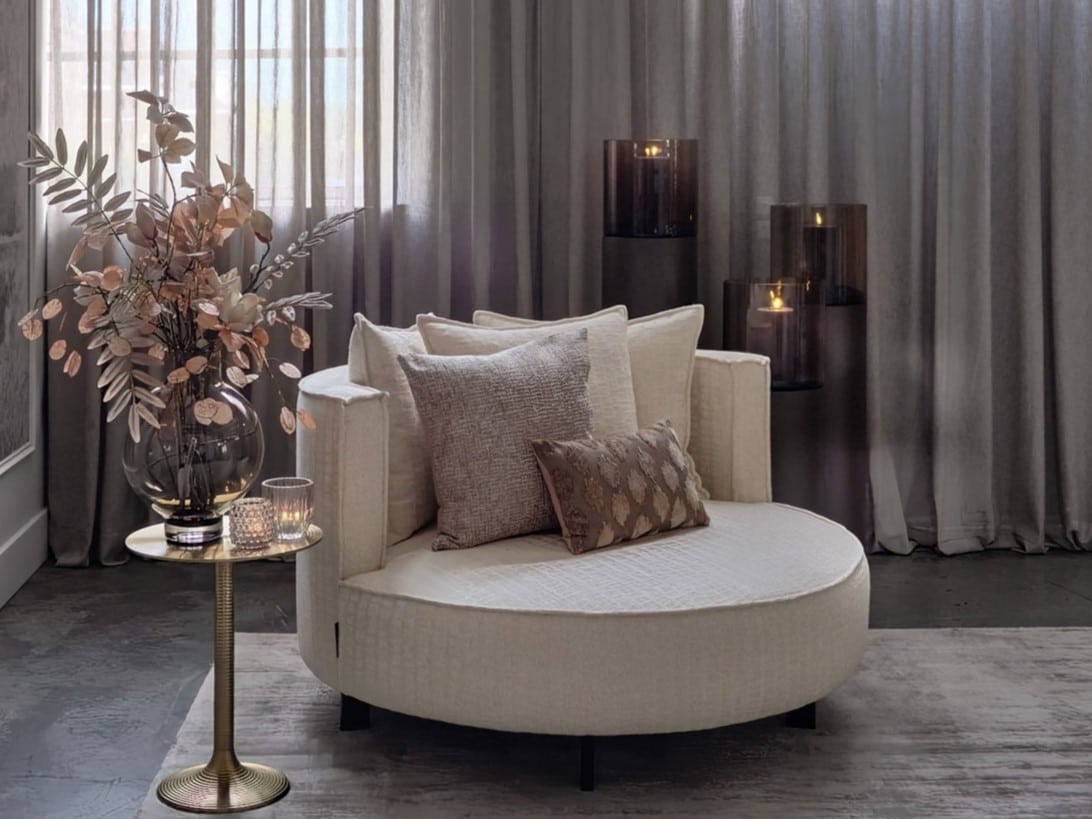
An armchair typically needs 70-100 cm in width and 70-90 cm in depth, plus at least 30-50 cm of space around the edge for comfort and functionality. For optimal placement, consider both the armchair's physical dimensions and its ergonomic range of motion. When furnishing your living room, it's important to consider not only the sheer size but also how the armchair harmonizes with your other furniture and the overall ambiance of the room.
What are the basic principles for placing an armchair?
When placing an armchair, it's all about finding the balance between comfort, functionality, and style. A well-placed armchair creates a inviting seating area in your interior, while an incorrectly positioned armchair can block the space or disrupt the sense of harmony.
Your armchair should be positioned so there's enough space to easily get in and out. It's also important that the armchair doesn't obstruct the flow of traffic in your room. A good rule of thumb is to leave at least 70-80 cm of clear space for walkways and 30-50 cm between the armchair and other furniture, such as a coffee table.
The relationship with other elements in the room also plays a role. Think of the view of the television, the view outside, or the interaction with other seating areas. An armchair is often a focal point in your interior and can serve as an accent or complement your existing furniture.
What is the minimum space needed for an armchair?
For a standard armchair, you need a minimum surface area of approximately 1 by 1 meter, including the necessary space for movement. The exact dimensions vary by model, of course, but most armchairs have a base surface approximately 70-100 cm in width and 70-90 cm in depth.
Besides the sheer size of the armchair itself, you should also consider the ergonomic space available. To comfortably get in and out of your armchair, you need at least 40-50 cm of free space at the front. Around 30 cm at the sides and back is sufficient, unless the armchair is adjustable or swivels, in which case you'll need more space.
Also keep in mind that some armchairs require additional space for functionality. A recliner, for example, requires more depth, sometimes up to 40 cm. For a swivel armchair, you should allow for a circle with a diameter at least equal to the maximum width or depth of the armchair, plus 30 cm of room to move.
How do different armchair styles affect the space required?
The style of your armchair directly influences how much space you need. A compact, rectangular armchair in a modern style generally takes up less space than a generous classic armchair with flared armrests and a high backrest.
Lounge chairs with deep seats and low backs create a relaxed atmosphere but also require more depth in your layout. They're perfect for larger living rooms where you want to create a cozy nook. Compact club chairs, on the other hand, utilize much less space and fit more easily in smaller rooms.
Another important consideration is visual impact. An armchair with an open base (on legs) appears lighter and takes up less space than a floor-length model, even though the actual dimensions may be the same. This "floating" effect creates a sense of spaciousness that is especially valuable in smaller interiors.
What is the ideal distance between an armchair and other furniture?
The ideal distance between your armchair and other furniture is crucial for both comfort and functionality. Ideally, there should be 30-45 cm of space between an armchair and a coffee table – close enough to reach your cup of coffee, but with enough space. legroom to sit comfortably.
In a conversation setup with a sofa or other armchairs, a distance of 1.8 to 2.4 meters between seats is optimal. This ensures that people can see and hear each other clearly without feeling like they're sitting too close or too far apart.
It's best to leave at least 5 cm of space between an armchair and the wall, unless you deliberately choose to position it against the wall. An armchair slightly away from the wall creates a more open and inviting look and makes it easier to clean around it.
For walkways around your armchair, you need at least 70-80 cm. This allows people to easily pass by without having to squeeze through the space, contributing to a pleasant flow in your room.
How can you fit an armchair into a small space?
In a compact living space, you can still enjoy the comfort of an armchair by choosing and placing it wisely. Go for a model with compact dimensions – Nowadays there are many stylish armchairs that are specially designed for smaller spaces.
Choose an armchair with an open base on legs instead of one that reaches the floor. This creates a sense of spaciousness by revealing more floor space. Light colors and sleek lines also make the armchair less dominant in the room.
Clever placement is essential. Consider a corner arrangement where the armchair is partially positioned in an unused corner. Or place the armchair next to a window where it can double as a reading nook. In a small living room, you could also opt for a swivel armchair that easily pivots to face the television or conversation area, giving you more flexibility in how you use the space.
Multifunctional options, such as an armchair with built-in storage or a model that folds out into a sleeping area for guests, give you extra utility without taking up extra space.
What role does the layout of your room play when choosing an armchair?
The existing layout of your room determines which type of armchair is best suited. Take a good look at the natural walking routes in your space and make sure the armchair doesn't block it. An armchair that obstructs the passage will quickly become a nuisance, no matter how beautiful it is.
Also consider the light in your room. An armchair by the window can be a wonderful spot for reading or relaxing, but make sure direct sunlight doesn't discolor the fabric. If you plan to use the armchair for watching TV, the correct viewing angle and distance from the screen are important.
Focal points in the room, such as a fireplace, a beautiful view, or a piece of art, can determine the ideal location for your armchair. Position the armchair so you can enjoy these elements while sitting in it.
Don't forget the relationship to other seating. In a social setting, you want people to be able to talk easily without craning their necks. For a more private function, such as a reading nook, the armchair can be placed a little more secluded.
What are the main conclusions about space planning for armchairs?
When planning the space for an armchair, it is essential to consider both the physical dimensions and the functional space around it. An armchair needs not only its own surface area, but also sufficient space around it for comfort and accessibility.
The style and size of the armchair should always be in balance with the available space. In a smaller living room, a more compact model is better, while a larger room calls for a more substantial armchair that can anchor the space.
It's important to think practically about how you'll use the armchair daily. Consider the flow of movement, user comfort, and its relationship to other furniture in the room.
At Room108, we understand how important it is for your armchair to perfectly complement your interior, both in terms of style and spatial utilization. That's why we offer custom solutions where you can tailor the size, shape, and fabric choice to your specific space. This way, you create not only a comfortable seating area but also a harmonious whole in your living room – whether you have a lot or a little space. Discover us extensive range of comfortable armchairs or make a personal shopping appointment for advice about the perfect armchair for your space.