







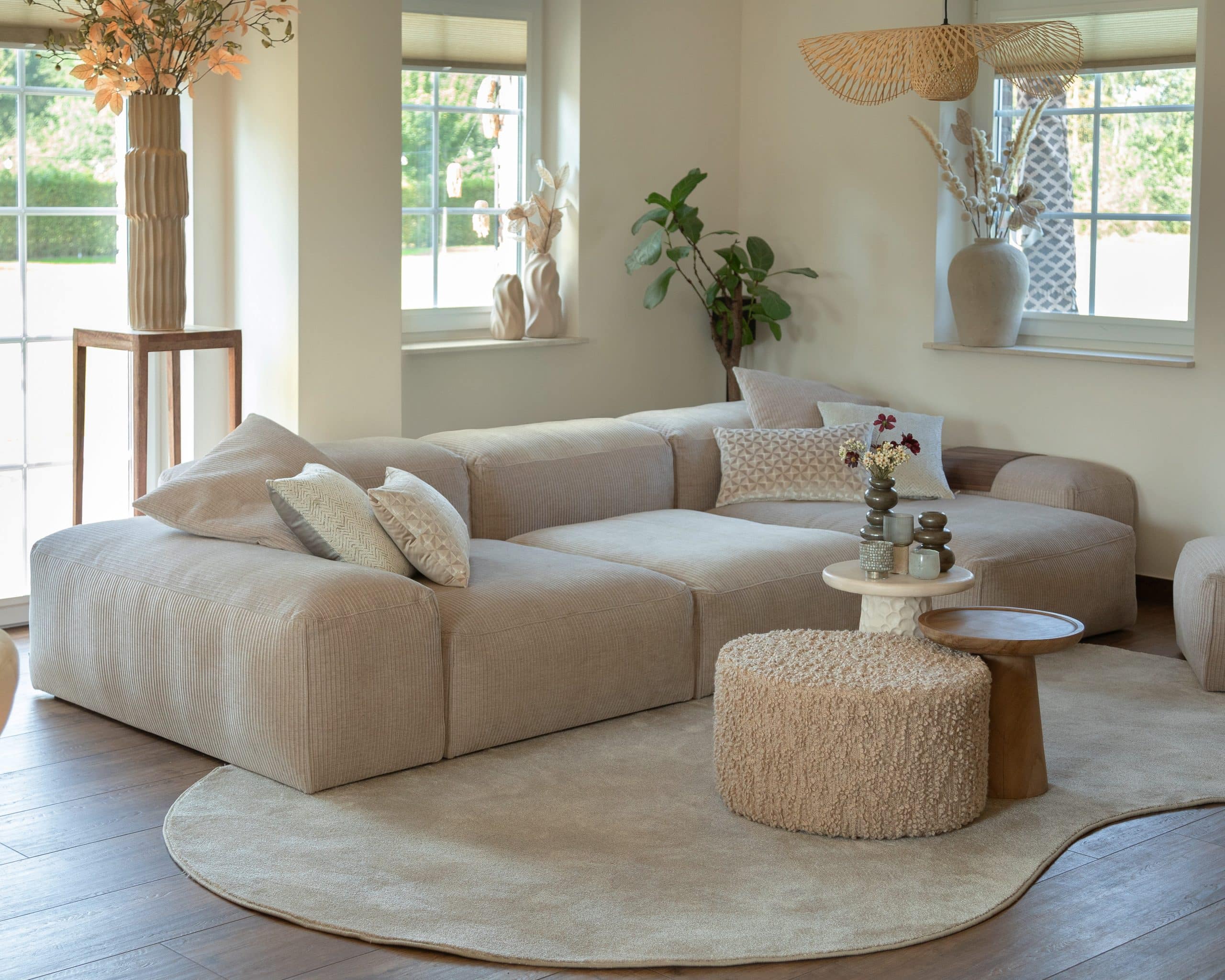
The difference between a corner sofa and a lounge sofa lies primarily in their shape and functionality. A corner sofa has an L- or U-shape with a distinct angle, making it a perfect fit for a corner of your living room and maximizing the available space. A lounge sofa, on the other hand, has an extended seat (chaise longue) on one side, providing extra comfort while relaxing or lounging. When choosing between these two types of sofa, factors such as space, intended use, and personal style preferences are important to consider.
Corner sofa vs. lounge sofa: The basics
Corner sofas and lounge sofas are both popular choices for your living room, but they differ significantly in design and function. A corner sofa is characterized by its characteristic L- or U-shape, with the sofa forming a distinct angle. These sofas are designed to fit into the corner of a room, making optimal use of the space.
A lounge sofa On the other hand, a chaise longue has an extended seat on one side. This design invites you to relax, stretch out your legs, or simply lounge. Lounge sofas often have a more relaxed and informal look and fit well in a relaxed, modern living environment.
Both types of sofas have found their place in contemporary interiors, with the choice often depending on your space, lifestyle and personal preferences. corner sofas for optimal use of space excel in their space efficiency, lounge sofas offer that extra bit of comfort for those who like to relax.
What is the difference between a corner sofa and a lounge sofa?
The main difference between a corner sofa and a lounge sofa lies in their construction and spatial layout. A corner sofa has a clearly recognizable corner and usually consists of several sections that together form an L- or U-shape. This design makes the sofa perfect for defining a space or placing it in the corner of a room.
A lounge sofa, on the other hand, has one extended section (the chaise longue) that extends from the seat, allowing you to stretch out your legs. This design is more focused on comfort and relaxation rather than optimizing space utilization. The lounge sofa is often less formal and offers more opportunities to adopt different seating positions.
In terms of functionality, a corner sofa generally offers more seating and is therefore ideal for larger families or people who frequently entertain guests. A lounge sofa, on the other hand, is perfect for those who enjoy watching television, reading a book, or simply relaxing after a long day.
Which sofa is best suited to a small living space?
In a small living space, it's important to choose a sofa that's both functional and space-efficient. A compact corner sofa can work surprisingly well in small spaces, as it utilizes the corner of the room that often goes unused. By placing the sofa in the corner, you keep the center of the room free, which creates a more spacious feeling.
A lounge sofa can also be suitable for smaller spaces, especially if you choose a compact model. The advantage of a lounge sofa is that it often looks lighter than a full-size corner sofa. Moreover, you can strategically position the chaise longue side to optimize the layout.
For the smallest spaces, consider a lounge sofa with a removable extension or a corner sofa with shallow seats. The most important thing is to measure exactly how much space you have available and ensure there's enough walking space around the sofa.
How do you choose the right size for your sofa?
Choosing the right size sofa starts with accurately measuring your living room. Don't just measure the available space for the sofa itself, but also consider a minimum of 70-90 cm of space around the sofa. This ensures your room remains accessible and functional.
For a corner sofa, it's important to measure the total length of both sides and check whether they fit in your space. Also, pay attention to doors, windows, and other furniture that might get in the way. For a lounge sofa, pay extra attention to the side with the extended section – make sure it doesn't block the passage.
A handy tip is to draw the contours of your desired sofa with masking tape Lay it out on the floor. This gives you a good visual idea of how the sofa will fit in your space. Also consider the future: if you move often, it's smart to choose a modular sofa that you can rearrange later.
Which materials and fabrics are suitable for your sofa?
The choice of material and fabric significantly impacts both the appearance and user-friendliness of your sofa. For families with children or pets, a durable, stain-resistant fabric like microfiber or a high-quality polyester blend is a practical choice. These fabrics are durable, easy to clean, and available in numerous colors.
If you're looking for luxury and comfort, a soft velvet or a high-quality cotton blend can give your sofa that atmospheric appearance These fabrics feel pleasant and can instantly give your living room a warm, inviting feel.
Color also plays a significant role. Neutral shades like beige, gray, or taupe are timeless and suit a variety of interior styles. Feeling a bit more adventurous? Then consider a statement color that reflects your personality. Consider your lifestyle: lighter colors show stains more easily, while darker shades can accentuate dust and hair.
How much does a quality custom sofa cost?
The price of a custom-made, high-quality sofa is determined by several factors. The size of the sofa is, of course, a significant factor – a large corner sofa requires more material than a compact lounge sofa. The chosen fabric or material also significantly influences the price, with high-quality fabrics like velvet or exclusive bouclé being more expensive than standard polyester.
In addition to material and size, the degree of customization also determines the final price. The option to create your own configuration, with specific modules such as an extended seat, extra-wide armrests or an adjustable headrest, adds value to your sofa.
Investing in a high-quality, custom-made sofa offers significant advantages over a standard, mass-produced sofa. A custom-made sofa fits perfectly in your space, meets your specific needs, and generally has a longer lifespan thanks to the use of superior materials and construction methods. Think of it as an investment in years of comfortable seating that adds a personal touch to your interior.
Conclusion: The ideal sofa for your interior
The choice between a corner sofa and a lounge sofa ultimately comes down to your personal preferences, available space, and lifestyle. A corner sofa offers optimal use of space and ample seating, while a lounge sofa excels in comfort and relaxation.
The most important thing is to choose a sofa that suits your lifestyle – from the right size and materials to a style that complements the rest of your interior. By consciously choosing a sofa that you can customize in terms of fabric, color, and arrangement, you create a piece of furniture that perfectly suits your needs.
At Room108, we're happy to help you make the right choice. Our collection offers both stylish corner sofas and comfortable lounge sofas that we can customize to your specific needs. Make a store appointment for personal advice and discover how a custom-made sofa can transform your living room into a atmospheric, personal space that you can enjoy for years to come.